In this place, everything has a name. Its name is pinned less than two palms above the ground, but its position and title represent the supremacy as if the upside down sky. It is close to the ground but we have to look up. The harvest season recurs. This place is full of moisture and happiness once again. The gardener’s face is overflowing with joy as he smiles at us and whispers in our ears. His voice is utterly beautiful. His long name lures us to sleep peacefully.
Let’s celebrate all the crops we have harvested. Let’s celebrate by swallowing his holy water to forget the unfortunate. Let’s dance in the shade of the temple made out of waste. Let’s sing a song to drive the rain back to its origin. Eventually there will be no longer people in this place, only their names will be sung eternally.
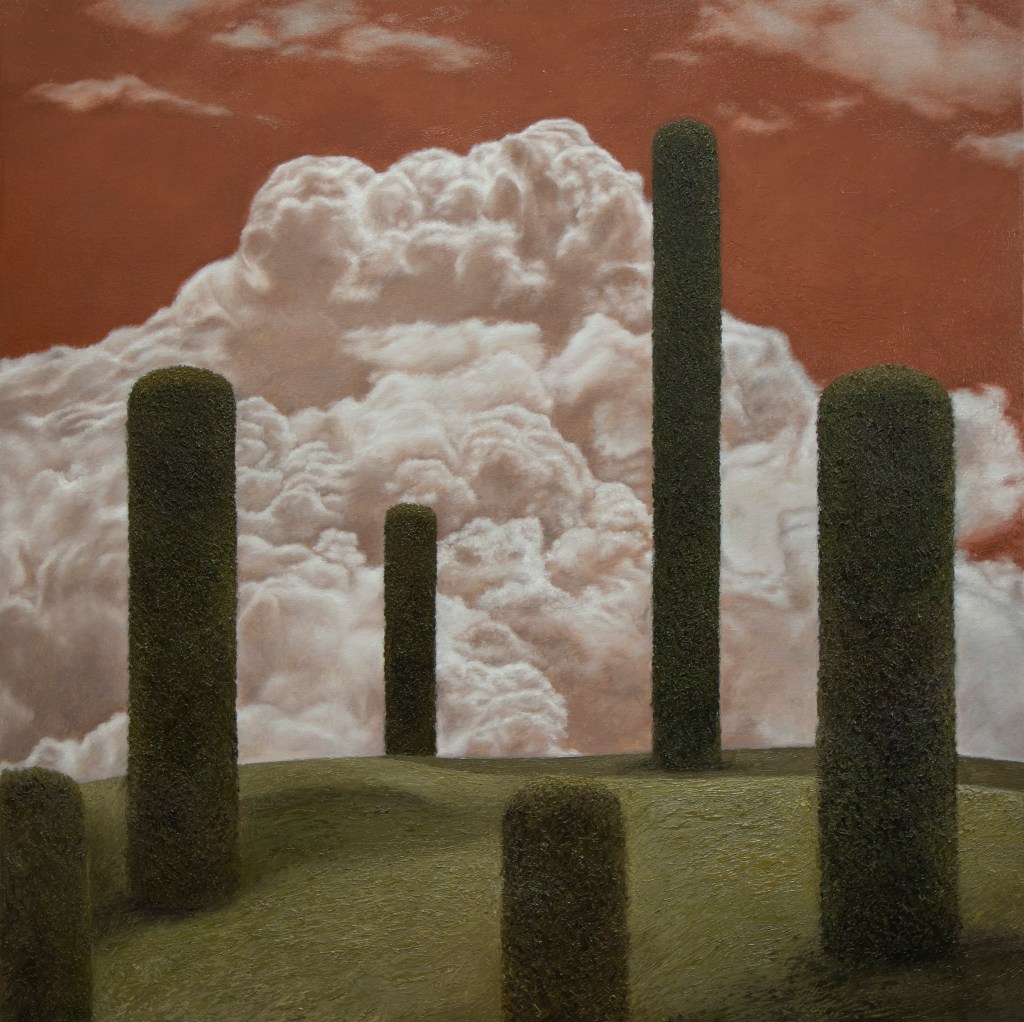
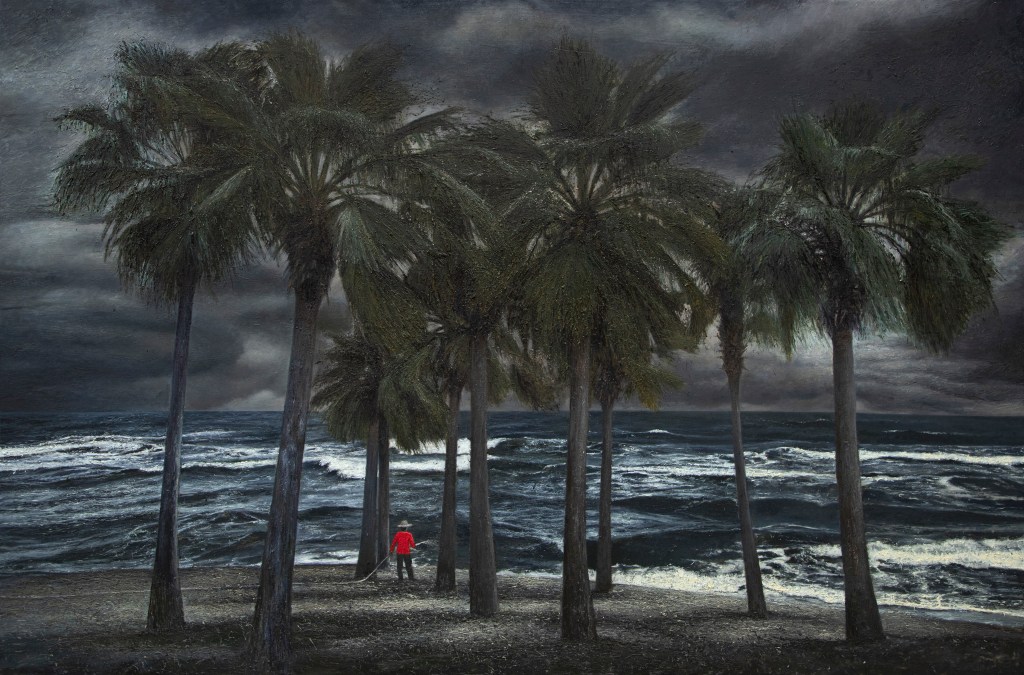
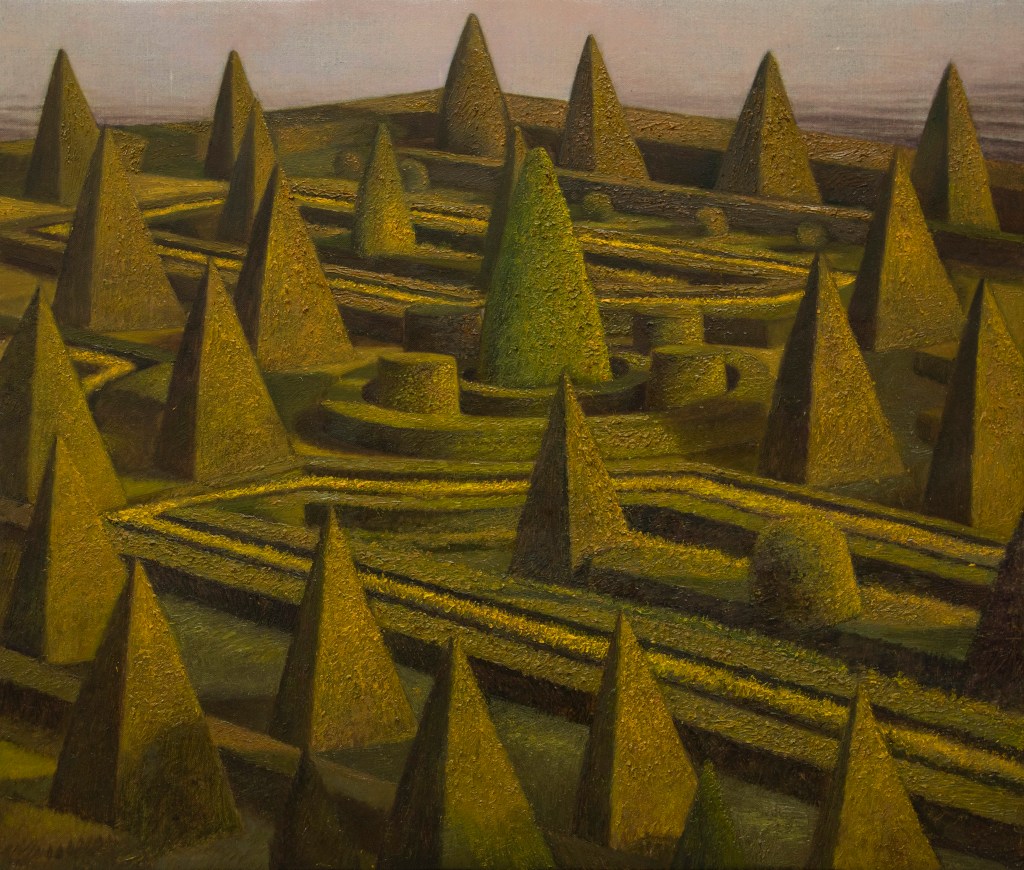
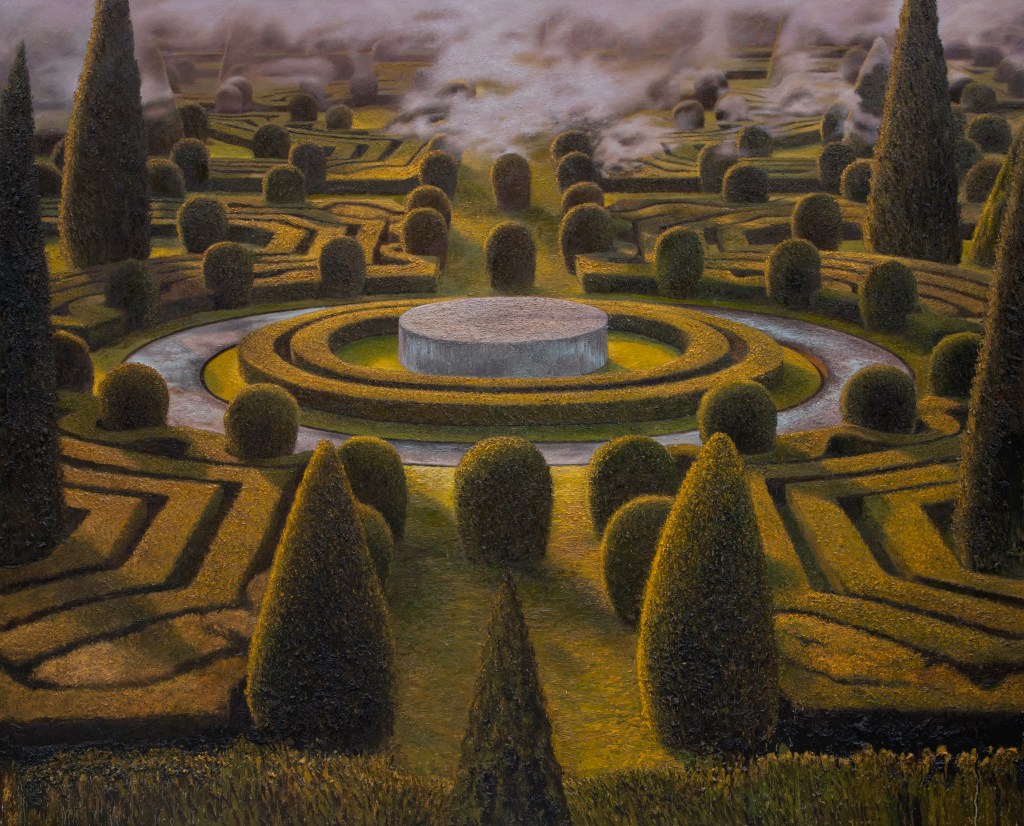
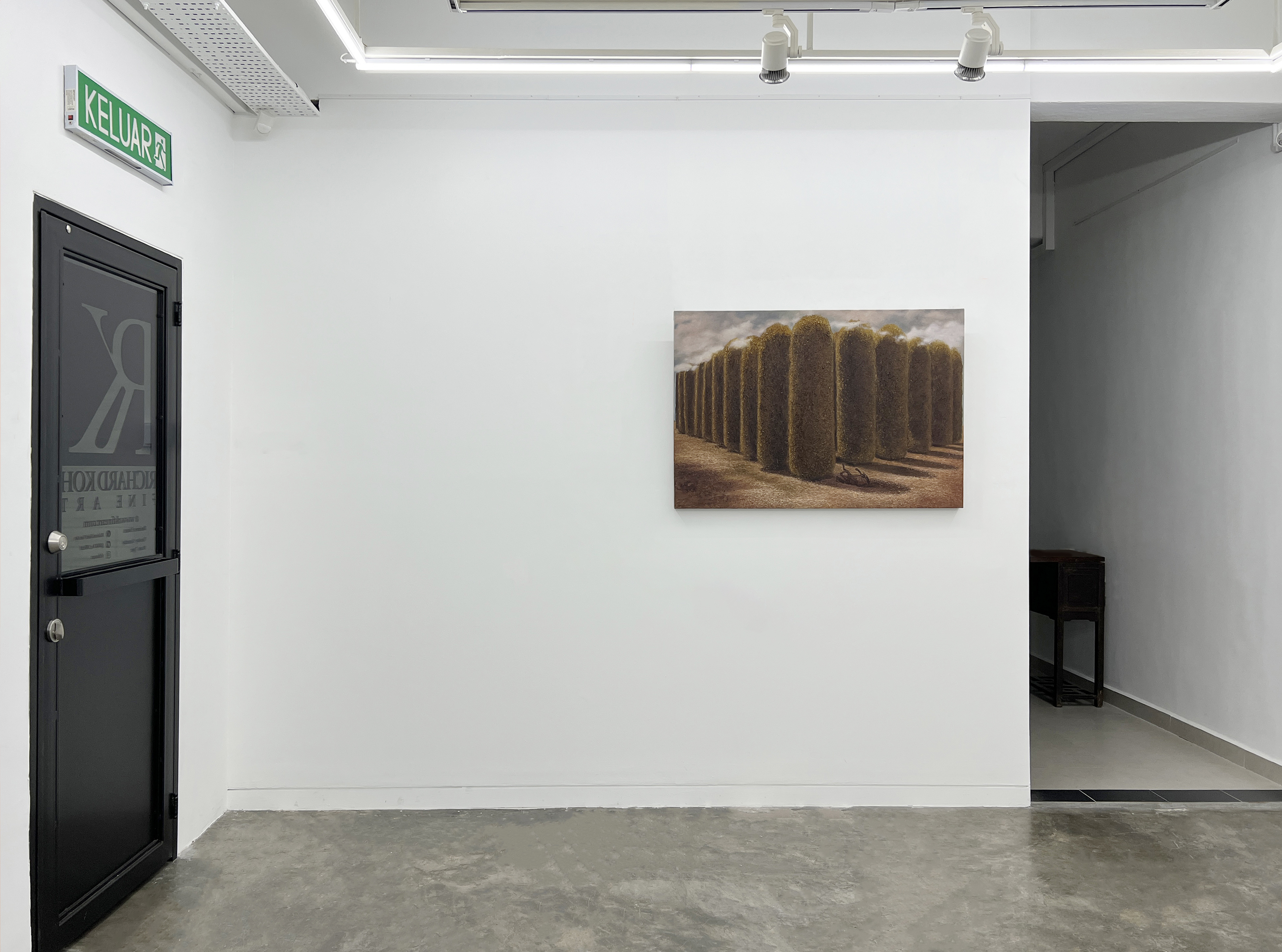
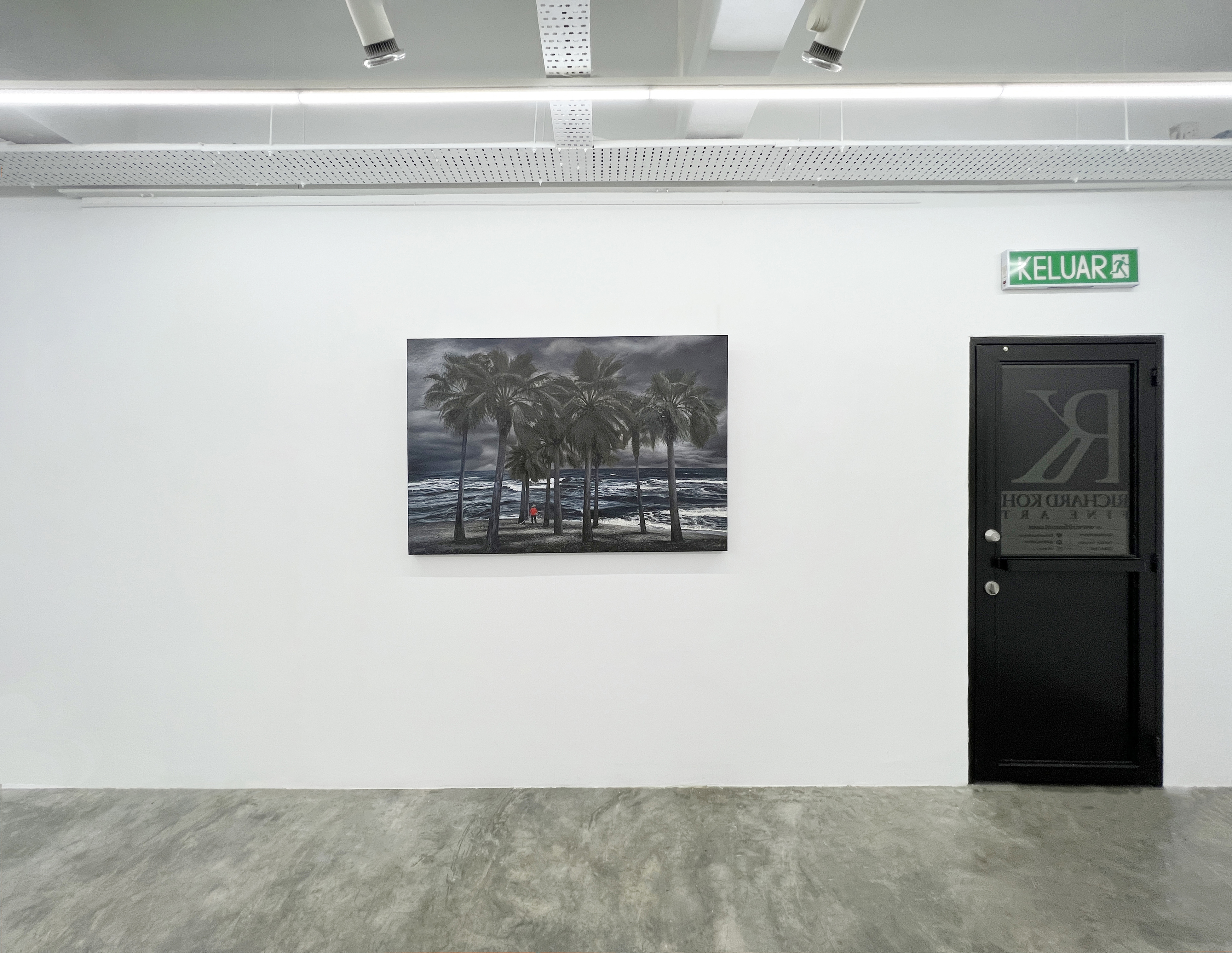
Harvest (2021) is a painting series that uses the formal garden as a metaphor for state ideology and the structuring of Thai society under a conservative power structure. Each painting presents meticulously designed gardens with symmetrical, layered, and tightly controlled patterns. These reflect mechanisms through which the Thai state constructs the ideal of “order” in relation to citizens and public space.
The artist treats the garden landscape as a political site where beauty is reinterpreted as a tool for controlling thought, memory, and shared history. This is especially relevant in the context of military coups and dominant discourses of Nation, Religion, Monarchy, and centralized bureaucracy, often concealed within the stillness and serenity of the “garden”.
Some works draw inspiration from actual landscaped state spaces such as Rajabhakti Park, the Government House garden, and the royal cremation ground. Particularly noteworthy is Nong Nooch Garden, whose designer has also contributed to Rajabhakti Park and high-level government gardens. These landscape styles have become a shared visual code for contemporary state-centric ideals of beauty.





 Pachara