Amidst the sweltering afternoon heat, while watching workers who were enthusiastically sweeping the road in a housing estate, I took photos of them and talked to them periodically. I sat on the footpath and looked at my hands getting burned as they were left uncovered by my big jacket. I took photos for a while. The sun challenged me. I looked at those workers again. Their faces and hands got burned and darkened by long exposure to sunlight. Sunlight is the evidence, which promptly urged me to imagine what they have gone through personally and professionally.
I met this group of workers by chance. Their job is to clean roads within the housing estate. Their faces are covered by big woven straw hats. Their oversized shirts have faded considerably, I cannot imagine their original colors. They wear black pants and sandals with big coconut broomsticks almost as tall as them in their hands. Their appearance caught my attention. They do not seem to belong here. However, I was more surprised when I learned about where they live.
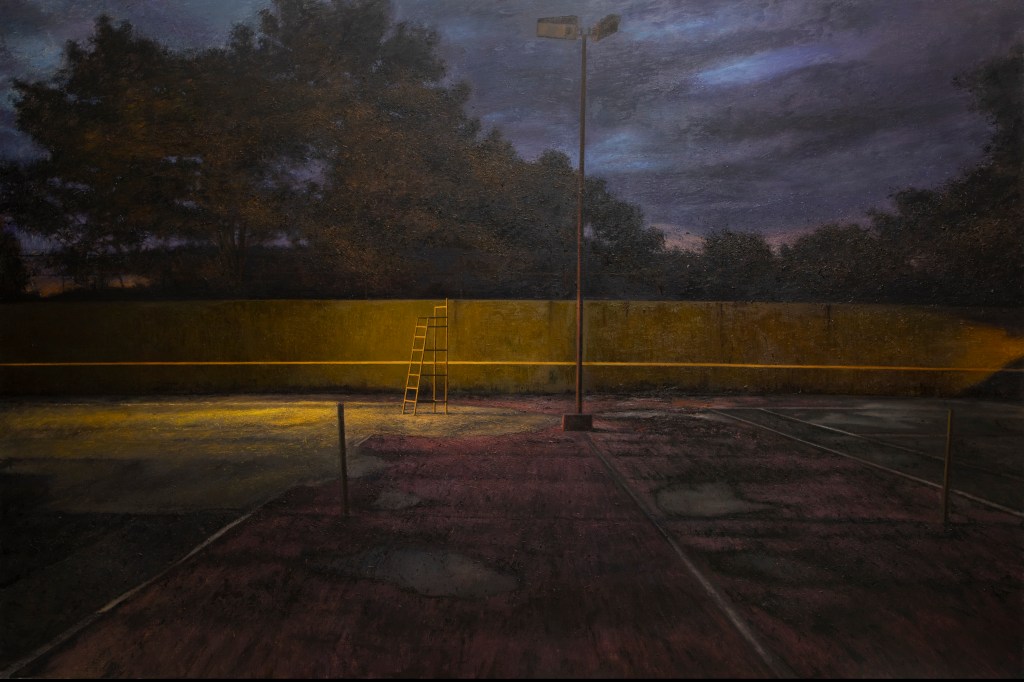
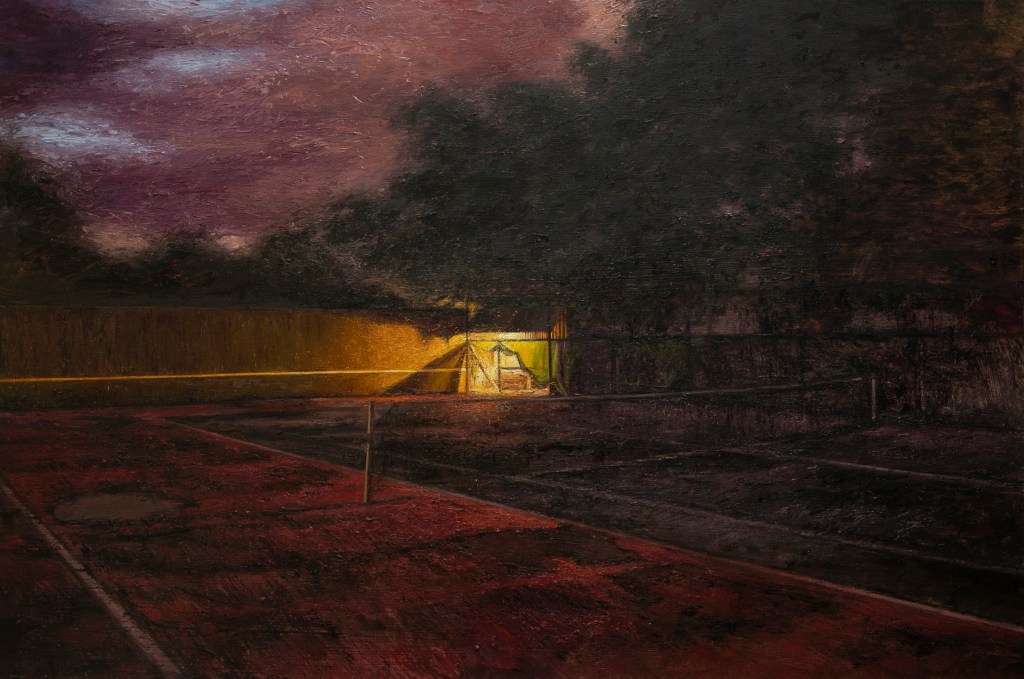
The housing of these workers called “camp”. It is 23 Tarang Wa, or 92 square-meter (I call it “23 Tarang Wa village”) permanent residence accommodating people from six families. Many of them have lived there for over 20 years (shortly after the construction of this housing development). Most of them came here because people living in their hometown have recommended them to work here. Some are relatives or children of the first generations. This place is hidden behind the knock board of a tennis court, a part of the clubhouse closed down several years ago as most villa owners did not pay the common area fees. Consequently, these workers get only a minimum wage per day without the benefits they deserve. This is why I started the series in January 2019
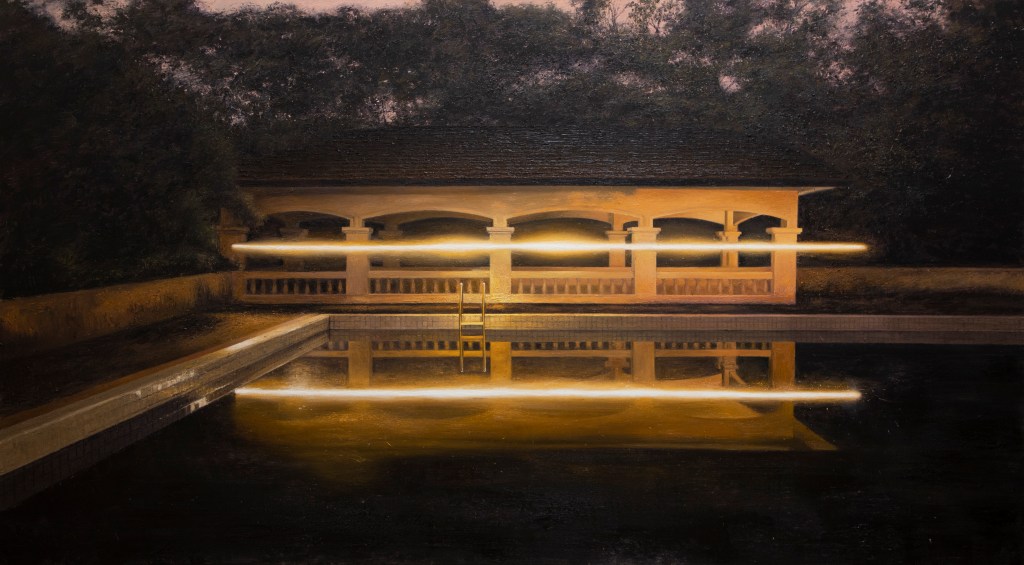
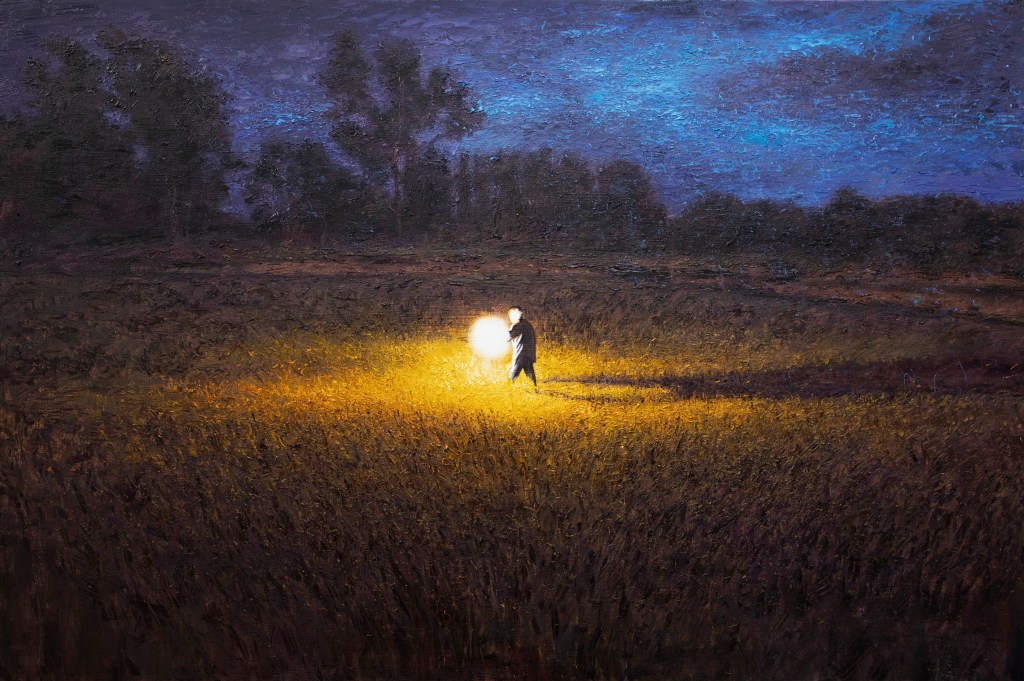
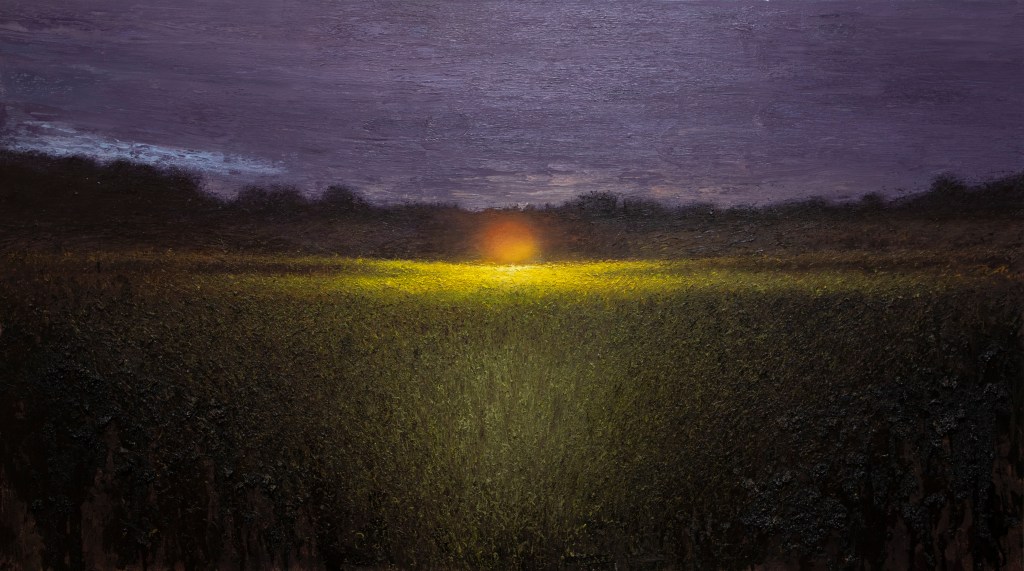
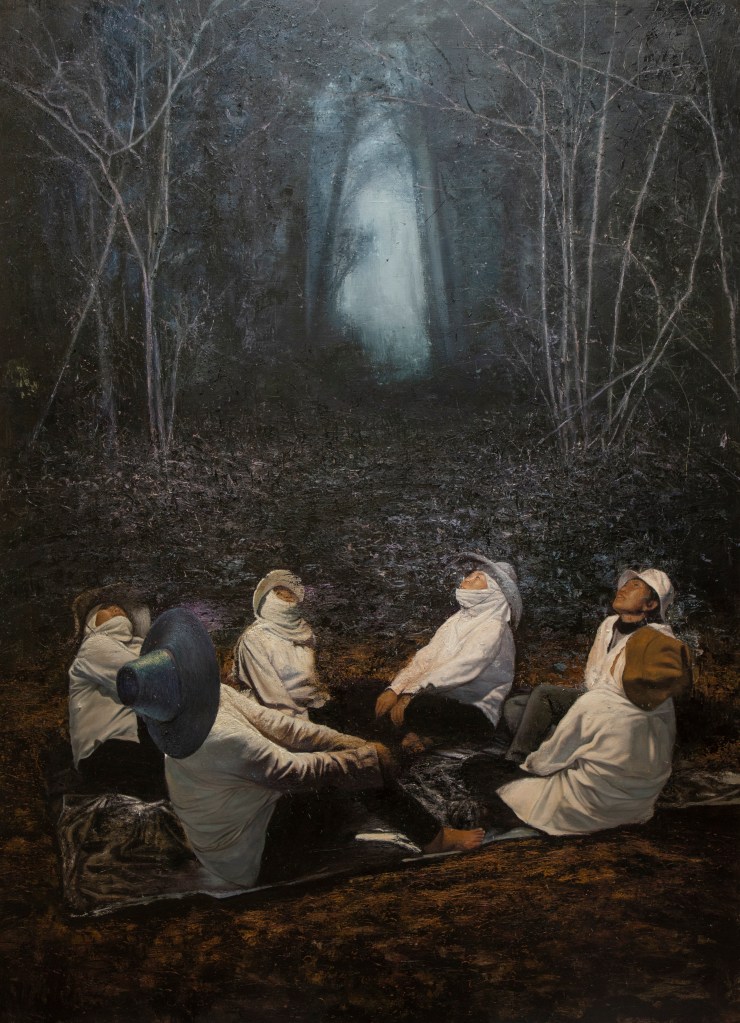
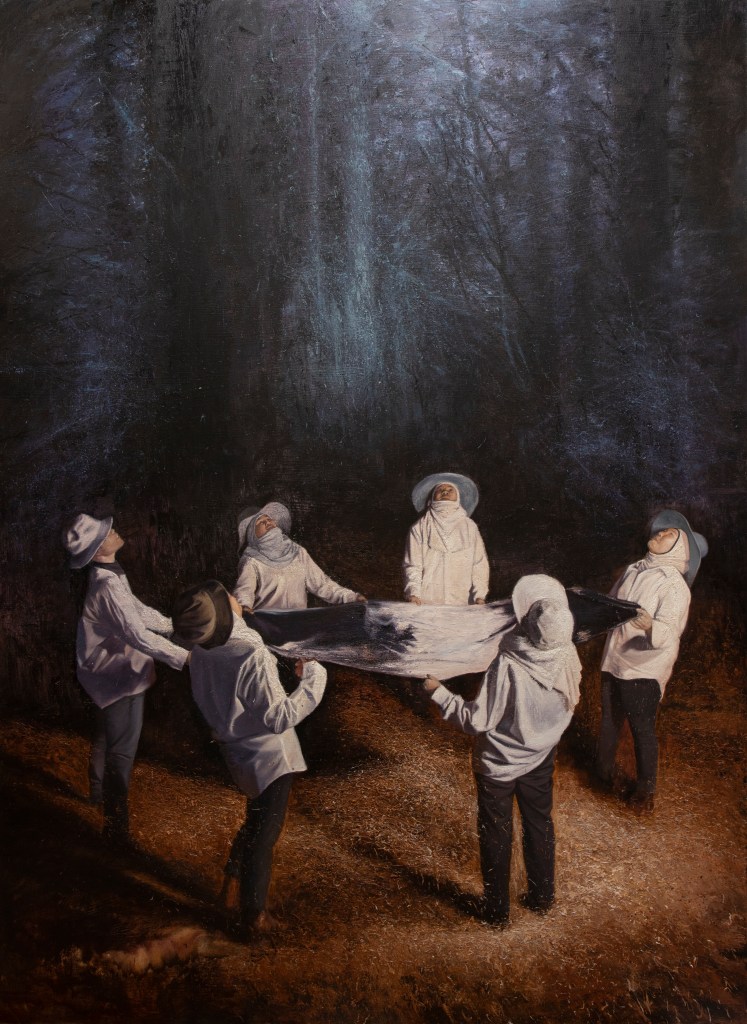
The series entitled “Eternity Village” was an extension of the search for a new possibility of working-class representation, the representation of reality, the visible and invisible, and objects being covered up and gazed upon. The concept is represented by a perspective of the painting and the context of the time in and outside painting. Thus, a painting is an “object of the gaze”. Viewers unveil the cover-up and give a new meaning to the representation of reality revealed in the painting. My paintings start from actual places. I captured them through photography and tuned them into paintings. The image inevitably hints at its origin. The images representing the reality are selected carefully as I am aware of “the invisible” in them.
I have divided the paintings into three groups, 1. Places within the housing estate, 2. The workers’ hometown in Kalasin, and 3. The workers. These three groups are the representation of reality. I wanted them to be parallel to each other but can be weaved into one story. This is an analogy of the artwork series “Eternity Village”. The imagined community exists parallel to 23 Tarang Wa village, the housing estate, workers’ hometowns, and a group of workers. I used these images as a tool to explore and contemplate between reality and paintings. As I used photographs, the drawing techniques and the concept are therefore very important to differentiate between a painting imitating a photograph and a painting appropriating a photograph.
The sun in the west reassured the end of the day. They got off work. I followed them to explore the 23 Tarang Wa village. I walked past the basketball court straight to a tennis court which was green like a rice field. I saw an entrance that seems like it was hiding from the world. It was the first time I saw such a small and narrow entrance. The wall was green like the tennis court. It was the evilest green I have ever seen. One worker allowed me to visit his room, which included all amenities one house should have. I asked him about other members and their living conditions. I listened to the story of a senior worker who had recently died in the next room. At this place, he took his last breath. I have often heard stories about workers who have to work themselves to death and this is one of them. We are fighting in a war where enemies are invisible. My curiosity began to run out, not because of fear but sadness infiltrating my thoughts. After talking to him for a while, I said goodbye to him when the sun was going down. I went back to the tennis court and stared at it for a long time until the dark came.
The darkness gradually appeared and everything was almost invisible. The sunlight disappeared after leaving a trace on the skin. The skin color was a strong sign. However, I felt grateful for the darkness as it allows me to see no difference. The time of reality is changing, but our time is repeated at the same place. I have dreamed of something higher than this wall. We are under the same sky but are divided by the rule of unequal time, two hours sitting in a coffee shop like one in a magazine, two-hour trip exchange for a cheap fare, sunbathing by a rooftop pool in the evening time, getting the face burned by afternoon sunlight in a paddy field, waiting for Paracetamol tablets for half of the day, counting calories as seen on a package for several minutes, half a minute in exchange for a sweat drop and being praised about how you are so self-sufficient, and the infinite time to have sweat and tears running down. Not everything is a coincidence. Not everything is because they do not fight poverty and not everything can be understood by mere gazing. Our time and breath are stolen in the light. The light that is like mold in the air. It grows, permeates, and devours our dreams even when we are awake. I came in with curiosity but I left with anger.






 Pachara